

Materials & Manufacturing Capabilities

Need a quote, design validation, or help selecting the right Belleville disc spring?
Complete the form below or call us to get started today!

By submitting this form you are agreeing to our website TERMS and PRIVACY POLICY.

Materials & Manufacturing Capabilities

Precision Belleville washers and machined components for demanding industries including aerospace, valve manufacturing, and downhole drilling

ISO 9001: 2015 Certified

50,000 ft² Facility

40-50 Employees

Exotic Alloys

INDUSTRIES WE SERVE

We meet the critical needs of our customers worldwide. Our team provides custom disc springs and products with full traceability, expedited production and excellent service. We can help find a solution for your application in any industry.
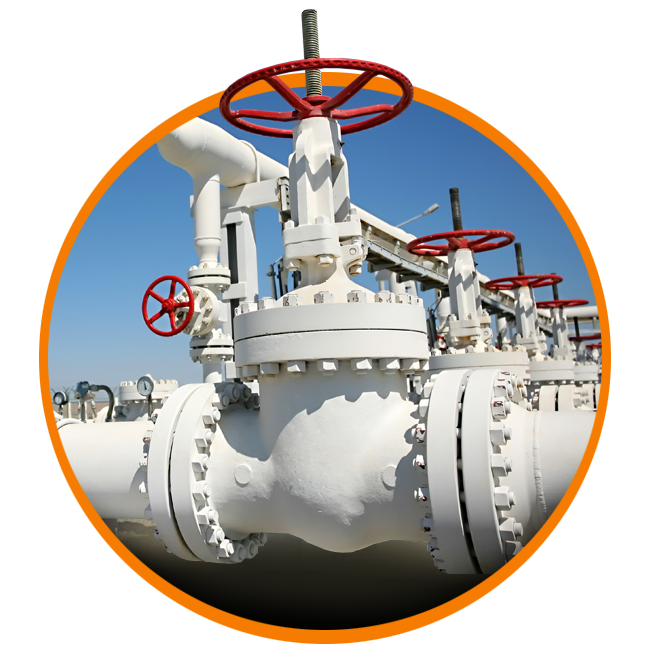
VALVE MANUFACTURING
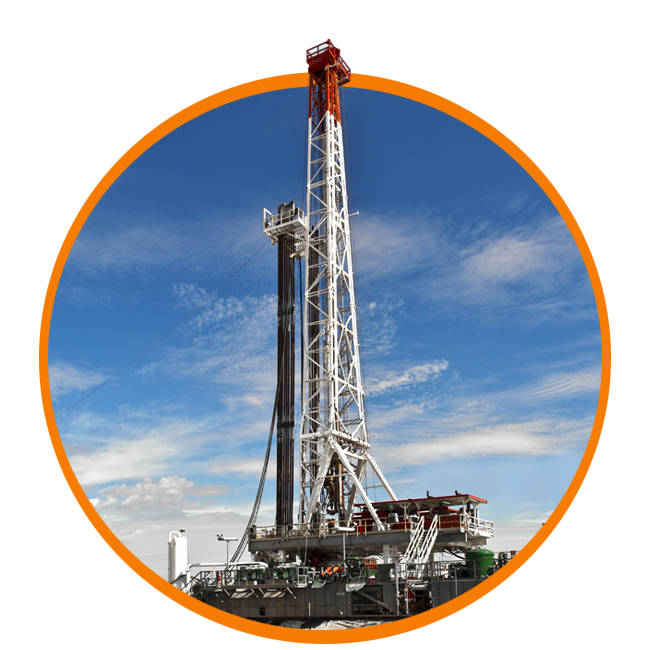
OIL & GAS DRILLING & REFINING

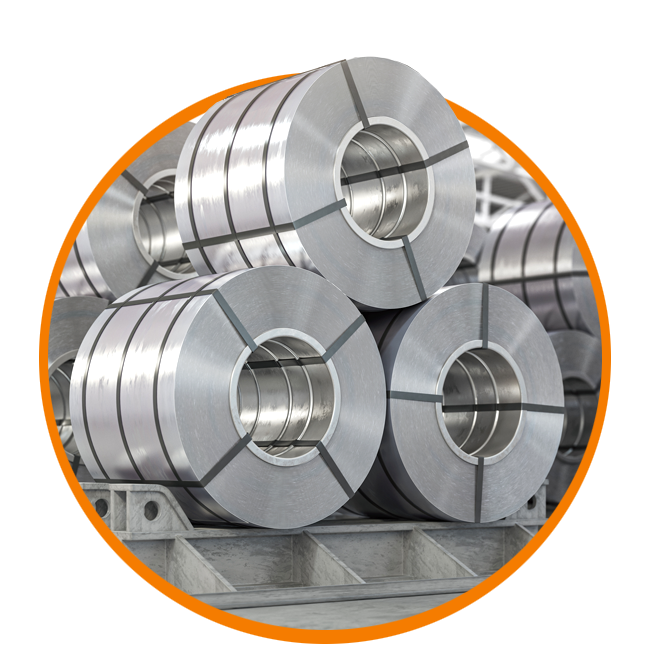
STEEL MILL EQUIPMENT

ELECTRICAL UTILITIES

Bellville Springs for Oil Refineries

PETROCHEMICAL & PROCESS FACILITIES

AIRCRAFTS & AEROSPACE

AUTOMOTIVE & RACING

INDUSTRIAL & HEAVY EQUIPMENT

DOWNLOAD BELLEVILLE PRODUCT INFORMATION

Materials

Material Category Grades / Options
Carbon & Alloys 1075 Spring Steel, 6150 Spring Steel
Stainless Steels 300 Series, 17-4 PH, 17-7 PH
High Temperature Alloys Inconel 718, Inconel X750
Exotic Grades Hastelloy, Waspaloy, Titanium, Other Exotic Materials
Tool Steel H13, S7, D2, A2

If you want more information about each material, check out our material options breakdown.

Engineering & Quality

Capabilties Specifications
Certifications ISO 9001:2015
Engineering Support Belleville spring design assistance
Inspection & Validation FARO 3D Measurement, Load Testing, Hardness Testing

Available Equipment

Equipment Description
Horizontal Band Saws CNC controlled cutting capabilities
CNC Bar Feed Lathes Precision turning for repeatable part production
Twin Spindle Robotic CNC Lathes Automated machining for higher volume and consistent output
Toolroom Lathes CNC toolroom machining for specialty or precision work
4-Axis CNC Vertical Mill Multi-axis machining for more complex geometries
Waterjet Tables Material cutting for precision shapes and profiles
Stamping Compound and progressive stamping capabilities
Heat Treating Thermal processing for material performance and durability

Additional Services

Outside Service Available Options
Testing Tensile Testing, Liquid Penetrant Testing
Inspection Magnetic Particle Inspection
Finishing Various Coatings

Applications By Industry

Industry Applications / Components
Valve Manufacturing
  • Belleville Springs for Live Loaded Packing
  • Soft and Metal Seated Ball Valves for Severe Service
  • Belleville disc springs for live loading seats
  • Metal body gaskets
  • Seat locking and retaining rings
  • Seats
Downhole Drilling
  • Belleville springs for shock tools
  • Belleville springs for jar tools
  • Belleville springs and components for drill motors
High Temperature & Cryogenic Flange Bolting
  • H13 flange Belleville springs
  • 17-7 stainless flange Belleville springs
  • Inconel 718 flange Belleville springs
Aerospace
  • Belleville springs and precision components
Fall Protection
  • Belleville spring and machined component applications
Heavy Equipment
  • Belleville spring and machined component applications

CALL (877) 235-5384 TO GET YOUR CUSTOM QUOTE

Material Option Breakdown

Spring Steel

1075/6150 spring steels are high-strength materials commonly used in spring applications, combining excellent strength with good toughness and fatigue resistance. Hardening is achieved through heat treatment processes involving austenitizing, quenching, and tempering. Unlike stainless steels, these materials do not offer significant corrosion resistance, but they provide superior mechanical properties and are often more cost-effective for high-load applications. The strength, durability, and wear resistance make 1075 and 6150 ideal choices for demanding spring components and other high-stress applications.

At the austenitizing temperature (typically around 1500–1650°F depending on grade), the steel becomes austenitic. Rapid cooling (quenching) transforms the structure into martensite, a very hard but brittle phase. Subsequent tempering at controlled temperatures reduces brittleness while improving ductility and toughness. This heat treatment process results in a strong, resilient material capable of withstanding repeated loading and high stress.

Nickel Alloy

Inconel® 718 is a high-strength nickel base superalloy used for cryogenic temperatures up to long term service at 1200°F. The alloy is readily fabricated and may be welded in either the annealed or precipitation (age) hardened condition. Anneal 1700 -1850°F, air cool or faster. Age 1325°F 8 hours, furnace cool to hold at 1150°F, for a total aging time of 18 hours, air cool. Alloy 718 will show a contraction of 0.0008 inch/inch after precipitation hardening.

Nickel Alloy

Inconel® X-750 is a precipitation-hardenable nickel-chromium alloy known for its corrosion and oxidation resistance, as well as its high strength at temperatures up to 1300°F. While many of the benefits of precipitation hardening diminish at temperatures above 1300°F, heat-treated material retains useful strength up to 1800°F.

Additionally, X-750 exhibits excellent properties even at cryogenic temperatures. Due to its high strength and corrosion resistance, X-750 finds use in critical applications within the aerospace, defense, land-based turbine, and nuclear industries.

Nickel Alloy

Inconel® 625 is a nickel-base alloy used both for its high strength and outstanding aqueous corrosion resistance. The strength of alloy 625 is primarily a solid solution effect from molybdenum and niobium. 

Nickel Alloy

Hastelloy is a family of nickel-based alloys known for exceptional corrosion resistance and good strength in extreme environments. These alloys combine high strength with outstanding resistance to oxidation, acids, and stress corrosion cracking. Unlike conventional stainless steels, Hastelloy maintains performance in highly corrosive and high-temperature conditions, making it a reliable choice for demanding applications. The corrosion resistance, thermal stability, and durability can make Hastelloy a preferred material for chemical processing, aerospace, and other critical industries.

At elevated temperatures, Hastelloy retains an austenitic microstructure and does not undergo the martensitic transformation seen in carbon or precipitation-hardened stainless steels. Strengthening is achieved primarily through solid-solution strengthening, with some grades also benefiting from precipitation mechanisms. Because of this, Hastelloy alloys maintain good ductility and toughness even after prolonged exposure to high temperatures.

Nickel Alloy

Waspaloy is a precipitation-hardened nickel-based superalloy combining high strength with excellent corrosion and oxidation resistance at elevated temperatures. It is specifically designed for service in high-temperature environments where strength and stability are critical. Unlike conventional stainless steels, Waspaloy maintains its mechanical properties at temperatures up to approximately 1600°F. The high-temperature strength, creep resistance, and oxidation resistance make Waspaloy a preferred material for aerospace, gas turbine, and other demanding applications.

At the solution treating temperature (typically around 1800–1850°F), the alloy has an austenitic structure. Rapid cooling retains this structure, and subsequent aging at intermediate temperatures (commonly around 1300–1550°F) produces precipitation hardening through the formation of gamma prime (γ′) particles. This heat treatment significantly increases strength while maintaining good ductility and creep resistance at elevated temperatures.

Stainless Steel

17-4 stainless is an age-hardening martensitic stainless combining high strength with the corrosion resistance of stainless steel. Hardening is achieved by a short-time, simple low-temperature treatment. Unlike conventional martensitic stainless steels, such as type 410, 17-4 is quite weldable. The strength, corrosion resistance and simplified fabrication can make 17-4 stainless a cost-effective replacement for high strength carbon steels as well as other stainless grades.

At the solution treating temperature, 1900°F, the metal is austenitic but undergoes transformation to a low-carbon martensitic structure during cooling to room temperature. This transformation is not complete until the temperature drops to 90°F. Subsequent heating to temperatures of 900-1150°F for one to four hours precipitation strengthens the alloy. This hardening treatment also tempers the martensitic structure, increasing ductility and toughness.

Stainless Steel

17-7 PH stainless is an age-hardening precipitation-hardened stainless combining high strength with good corrosion resistance. Hardening is achieved through a series of heat treatments involving conditioning, transformation, and precipitation hardening. Unlike conventional martensitic stainless steels, such as type 410, 17-7 PH offers excellent fatigue resistance and is especially well suited for spring applications. The strength, corrosion resistance, and good formability can make 17-7 PH stainless a cost-effective solution for high-performance spring components and other applications requiring high strength and elasticity.

At the solution treating condition (Condition A), the metal is austenitic. Through subsequent conditioning (such as cold working or heat treatment), it transforms to a martensitic structure. Following this transformation, precipitation hardening is achieved by heating to temperatures typically around 900–1050°F for a specified period, which strengthens the alloy. This hardening treatment increases strength while maintaining good ductility and excellent spring properties.

Stainless Steel

304 is the original “18-8” stainless. It is produced in greater quantity than any other austenitic stainless steel. 304 provides useful resistance to corrosion in many environments ranging from moderately reducing to moderately oxidizing. Through the controlled addition of nitrogen, it is common for 304L to meet the mechanical properties of 304. As a result, most products are dual certified as 304/304L.

Stainless Steel

316/316L is the most commonly used austenitic stainless steel in the chemical process industry. The addition of molybdenum increases general corrosion resistance, improves chloride pitting resistance and strengthens the alloy in high temperature service. Through the controlled addition of nitrogen it is common for 316/316L to meet the mechanical properties of 316 straight grade, while maintaining a low carbon content.

Stainless Steel

A-286 stainless is an age-hardened iron base superalloy for applications requiring high strength from -320°F up to 1000°F long time, 1300-1500°F short time. Oxidation resistance is high for continuous service to 1500°F, intermittent to 1800°F. Aqueous corrosion resistance is comparable to 316/316L stainless. Heat treatment according to AMS 5525 requires a solution anneal at 1800°F, air cool. Age at 1325°F for 16 hours and then air cool.

Titanium Alloy

Titanium alloys are high-strength, lightweight materials combining excellent corrosion resistance with outstanding strength-to-weight ratio. These alloys perform well in both ambient and moderately elevated temperature environments. Unlike conventional steels, titanium offers superior resistance to many corrosive environments while maintaining relatively low density. The strength, light weight, and corrosion resistance make titanium alloys a preferred choice for aerospace, marine, and other high-performance applications.

At elevated temperatures (typically around 1600–1750°F depending on the alloy), titanium transforms to a beta phase structure. Upon cooling, the material forms a mixture of alpha and beta phases, which can be controlled through heat treatment and processing. Strengthening is achieved through alloying and heat treatment, resulting in a balance of strength, ductility, and fatigue resistance.

Tool Steel

H-13 tool steel is a chromium-molybdenum hot work steel combining high strength with excellent toughness and resistance to thermal fatigue. It is designed for use in elevated temperature environments where resistance to heat checking and softening is critical. Unlike conventional carbon steels, H-13 maintains its hardness and strength at higher temperatures while offering good wear resistance. The toughness, thermal stability, and resistance to cracking make H-13 a reliable choice for tooling, dies, and other high-stress applications.

At the austenitizing temperature (typically around 1800–1900°F), the steel becomes austenitic. Rapid cooling (quenching) transforms the structure into martensite, providing high hardness. Subsequent tempering at elevated temperatures improves toughness while maintaining strength and resistance to thermal fatigue. This heat treatment process results in a durable material capable of withstanding repeated thermal and mechanical loading.

Tool Steel

S7 tool steel is a shock-resistant air-hardening steel combining high strength with excellent toughness and impact resistance. It is designed for applications requiring the ability to withstand sudden loads and repeated shock without cracking. Unlike conventional carbon steels, S7 provides superior resistance to impact and good wear resistance, while maintaining machinability and stability during heat treatment. The toughness, durability, and resistance to shock loading make S7 a reliable choice for tooling, dies, and other high-stress applications.

At the austenitizing temperature (typically around 1700–1750°F), the steel becomes austenitic. Air cooling transforms the structure into martensite, resulting in a combination of hardness and toughness. Subsequent tempering at controlled temperatures improves ductility while maintaining strength and impact resistance. This heat treatment process produces a material capable of withstanding repeated mechanical shock and high stress.

Tool Steel

A2 tool steel is an air-hardening cold work steel combining high hardness with good wear resistance and dimensional stability. It is designed for applications requiring precision and resistance to abrasion under repeated loading. Unlike precipitation hardened stainless steels, A2 provides excellent toughness and wear resistance at ambient temperatures, making it ideal for dies, punches, and other tooling where high stress and repeated contact occur. The hardness, durability, and stability make A2 a reliable choice for demanding cold work applications.

At the austenitizing temperature (typically around 1750–1850°F), the steel becomes austenitic. Air cooling transforms the structure into martensite, providing high hardness. Subsequent tempering at controlled temperatures improves toughness while maintaining strength and wear resistance. This heat treatment process results in a material capable of withstanding repeated mechanical stress and high contact loads.

Tool Steel

D2 tool steel is a high carbon, high chromium cold work steel combining high strength with excellent wear resistance and good dimensional stability. It is designed for applications requiring resistance to abrasion and long service life under high contact stress. Unlike conventional carbon steels, D2 offers significantly improved wear resistance due to its high carbide content, though it has lower toughness compared to shock-resistant grades. The hardness, wear resistance, and stability make D2 a reliable choice for tooling, dies, and other high-wear applications.

At the austenitizing temperature (typically around 1800–1900°F), the steel becomes austenitic. Air or oil quenching transforms the structure into a high-carbon martensite with a significant amount of retained carbides. Subsequent tempering improves dimensional stability while maintaining high hardness and wear resistance. This heat treatment process results in a durable material capable of withstanding abrasive conditions and high compressive loads.

BELLEVILLE INTERNATIONAL QUALITY POLICY

At Belleville International, our quality policy means we only design, manufacture and distribute disc springs and other components that meet or exceed customer expectations. We’re committed to excellence in all that we do, and to meeting the requirements of our quality management system with an eye on continually improving effectiveness.

WHAT OUR CUSTOMERS HAVE TO SAY

See what our customers have to say about our outstanding service.
“Belleville’s customer service is outstanding. Always keeping my company informed if any changes are made or need to orders. Responds quickly to their customers and is very professional.”

DRILLING INDUSTRY BUYER

“Working with Belleville is always a pleasure. The customer service is top notch! I am spoiled to quick responses and order acknowledgements.”

VALVE INDUSTRY BUYER

“It is always a pleasure to work with the Belleville International staff. Great customer service and great product.”

BUYER FOR GLOBAL DISTRIBUTOR